

15 Successful Apps Built With No-code (2026 Examples)
15 min
read
Explore 15 successful no-code apps with real examples. See how founders build MVPs, SaaS, and business apps faster using no-code platforms.


What No-code Apps Are
No-code apps are created using visual builders, logic blocks, and integrations that replace manual programming, while still producing fully functional mobile and web applications used in daily operations.
Businesses and founders choose no-code because it removes many of the barriers of custom development. You don’t need months of engineering work to validate an idea, replace spreadsheets, or launch an internal system. Many teams also see clear operational benefits of no-code development when speed and flexibility matter more than building everything from scratch.
No-code changes speed, cost, and ownership at the same time. Apps can be built and iterated faster, budgets stay predictable, and companies keep control over their product as it evolves with their operations.
What Can You Build With No-code?
No-code platforms support a wide range of real-world products, from internal tools to customer-facing mobile apps.
What matters most is not the category, but how well the app is designed around real workflows, users, and business constraints.
When used correctly, no-code enables teams to ship production-ready apps that can evolve as operations change.
- Cross-platform mobile apps (iOS and Android)
Build a single app that runs on both platforms with shared logic and native-like UX. This approach is common in modern no-code mobile app development when speed and maintainability are priorities. - Consumer-facing mobile applications
Apps for onboarding, content, or engagement can be built with no-code, including products similar to those explored when learning how to build a social media app without code. - Business and internal mobile tools
Replace spreadsheets, emails, and disconnected tools with internal apps for operations, approvals, reporting, and team coordination that people actually use day to day. - Booking and scheduling apps
Apps that manage availability, reservations, payments, and reminders work well with no-code when tied directly to business rules and real-time data. - Marketplace and service apps
Two-sided platforms connecting providers and customers can be built with no-code, including profiles, matching logic, messaging, and payments. - SaaS companion mobile apps
Extend an existing SaaS product with a mobile experience focused on key actions, notifications, and quick access, without rebuilding the core system. - Community and social apps
Member-based apps with feeds, groups, messaging, and gated content are common no-code use cases when engagement and iteration matter more than custom infrastructure. - Healthcare and wellness apps
Habit tracking, patient portals, and wellness tools are often launched by teams exploring how to build a fitness app with no-code, as long as data and permissions are designed carefully. - Education and training apps
Learning platforms, internal training tools, and course companions can be launched faster with no-code while still supporting progress tracking and user roles. - Field service and operations apps
Apps for on-site teams to log work, update statuses, and sync data in real time help reduce manual reporting and operational blind spots. - Event, membership, and loyalty apps
Manage access, tickets, memberships, and rewards through apps that centralize user data and automate repetitive processes. - Startup MVPs and pilot products
No-code is especially effective for validating ideas, testing markets, and iterating quickly before committing to larger-scale builds.
Real-World No-code App Examples Across Industries
These are real, shipped no-code apps built and used by businesses every day. They are not UI demos or concept prototypes.
Each example reflects how no-code is applied to solve concrete operational problems, support real users, and evolve as the business grows.
1. BuildGenius – AI-Powered Operations App
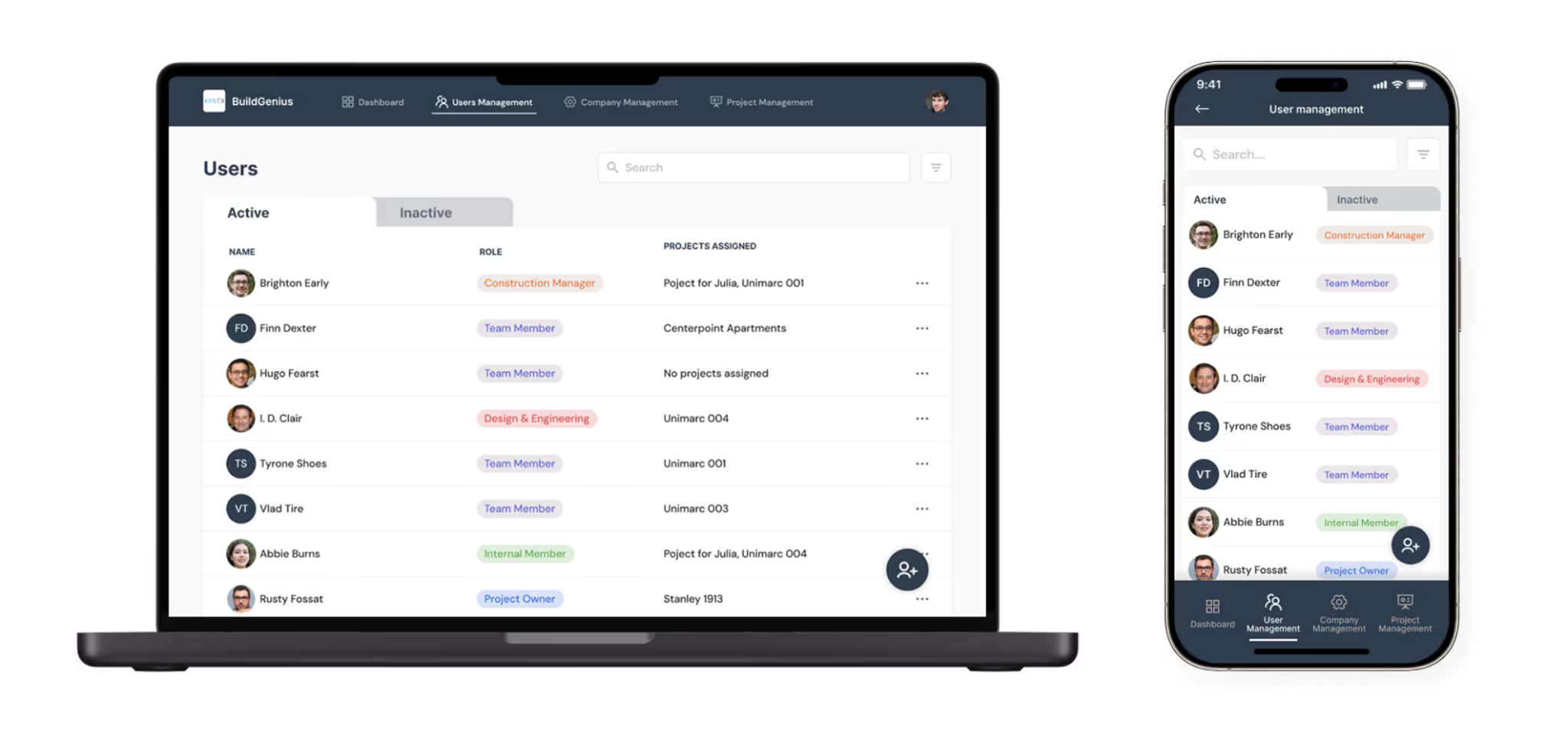
BuildGenius is an AI-enhanced operations platform created for a growing real estate development company managing multiple construction projects at once. The app centralizes project data, documents, and financial information into a single, conversational system.
What problem the app solved
Critical project information was scattered across emails, cloud drives, and meeting notes, forcing teams to spend hours manually searching for documents and updates. As projects scaled, the lack of visibility and coordination became a direct blocker to growth.
Outcomes or measurable impact
The platform reduced document retrieval time by 45% and increased the company’s capacity to manage simultaneous projects by 70% within six months, while dramatically improving response times to project-related questions.
2. CHIIP – AI Grant & Proposal Platform
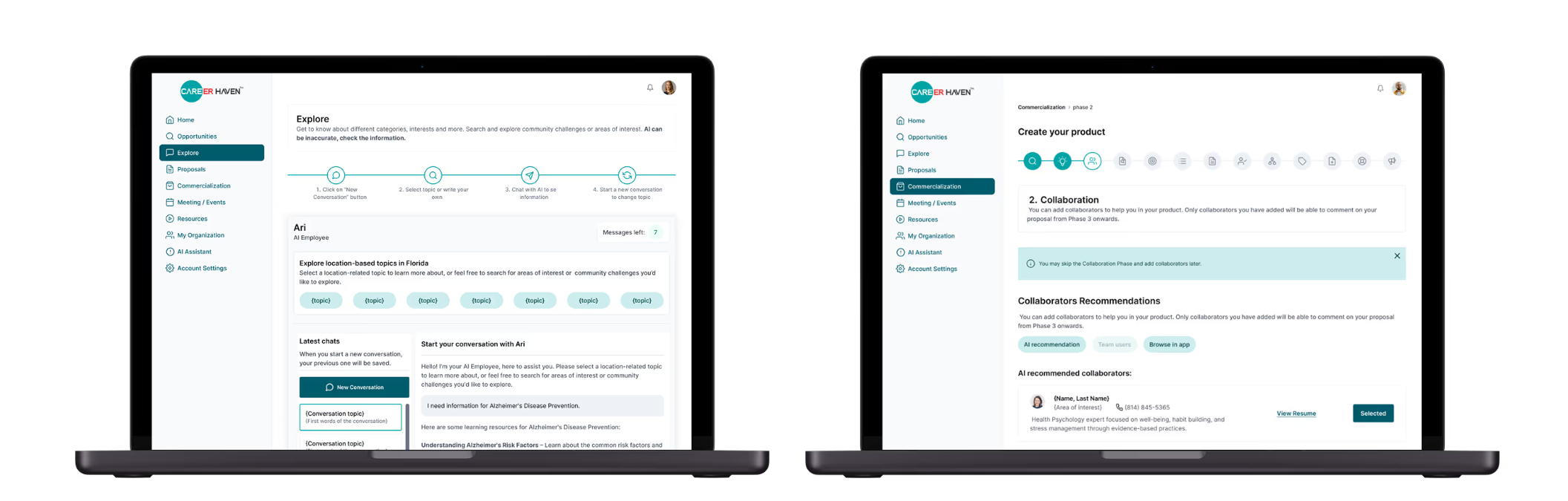
CHIIP is a community-focused platform that guides innovators from early ideas to funded proposals using AI-assisted research, writing, and collaboration tools. It evolved from a simple proof of concept into a full-scale, multi-version product.
What problem the app solved
Community innovators lacked access to expert grant-writing knowledge and struggled with complex RFP requirements, inefficient collaboration, and time-consuming research processes that limited their ability to secure funding.
Outcomes or measurable impact
The platform reduced proposal research time by 40%, enabled 70% of proposals to be completed within initial timelines, and significantly increased submission volume after launch, helping democratize access to funding.
3. Stylecraft – Inventory & Sample Management App

Stylecraft is an internal operations app built for a high-end furniture retailer managing thousands of physical samples across multiple showrooms and warehouses. The app provides real-time visibility into inventory movement and usage.
What problem the app solved
Samples constantly moved between locations with no reliable tracking, leading to lost items, wasted time searching, and poor visibility into which products actually supported sales. The lack of accountability created both operational and financial risk.
Outcomes or measurable impact
The app reduced time spent locating samples by 45%, increased project management capacity by 70%, and eliminated lost inventory by creating a fully traceable, real-time system for all sample movements.
4. OXXO – Enterprise Valuation Management Platform
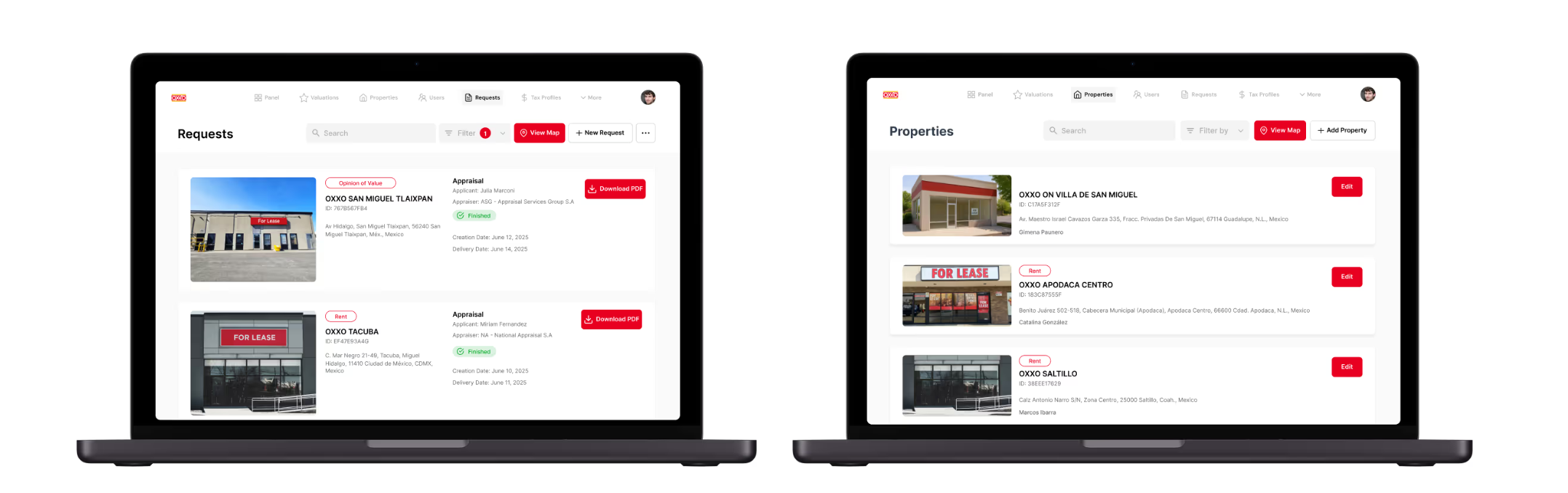
This internal platform supports property valuation workflows for one of the largest retail operators in Latin America, handling thousands of valuation requests across multiple brands and external partners.
What problem the app solved
Valuation processes were fragmented across emails, spreadsheets, and external documents, making it impossible to track progress, prioritize projects, or standardize reporting at scale.
Outcomes or measurable impact
The platform centralized over 15,000 property valuations, reduced valuation processing time by 40%, and gave decision-makers real-time visibility to support faster, data-driven expansion.
5. Evolutioner – Wellness Mobile App Rebuild
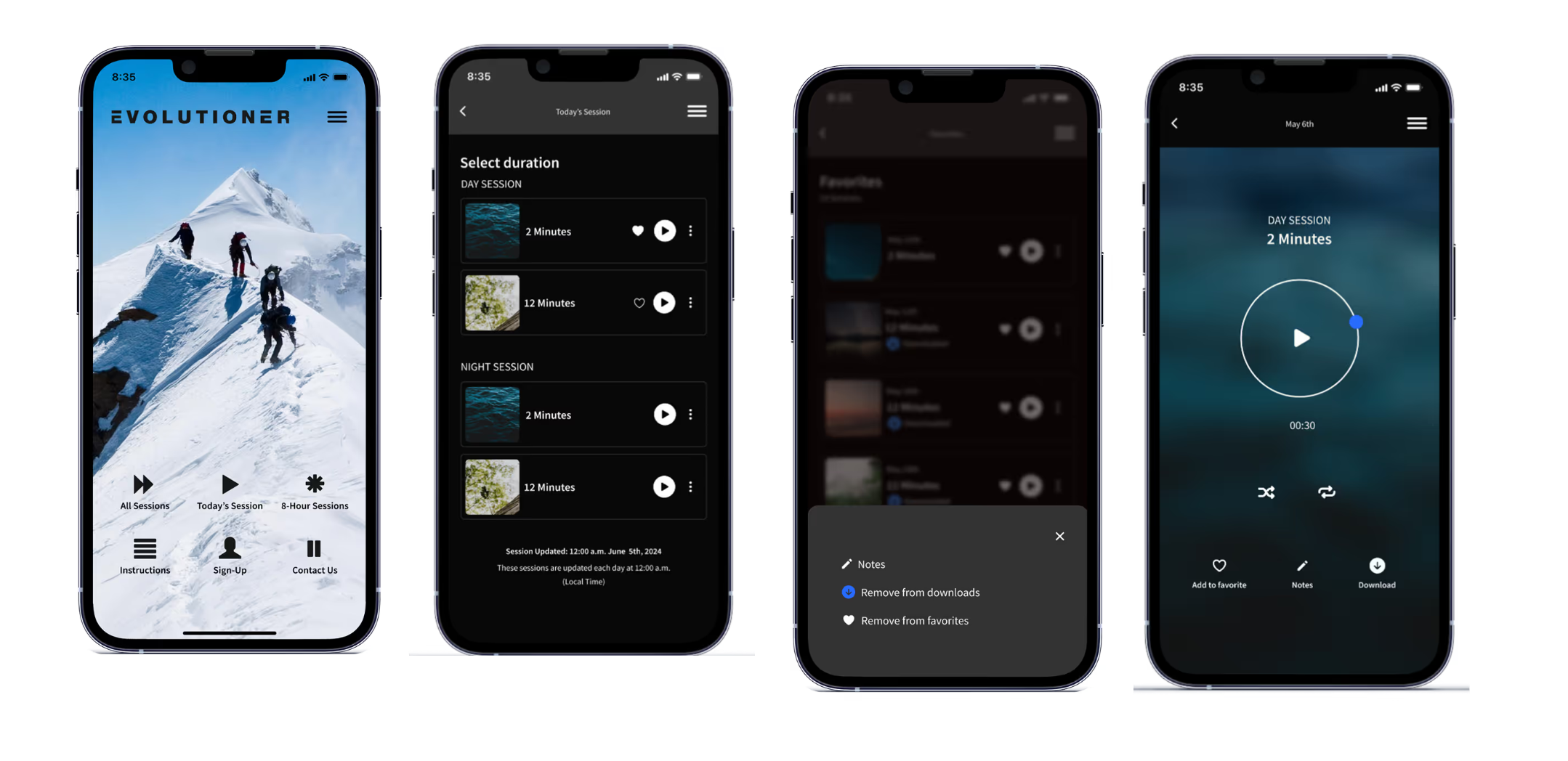
Evolutioner is a sound therapy and wellness app relied on daily by thousands of users for meditation, focus, and sleep. The project involved rebuilding the app’s foundation without disrupting existing user routines.
What problem the app solved
Frequent crashes, unstable performance, and unreliable audio playback were breaking users’ daily wellness rituals and eroding trust in a product people depended on for mental health support.
Outcomes or measurable impact
After the rebuild, app crashes were reduced by 85%, background audio reliability reached 100%, and users regained confidence in a platform that now supports long-term growth without sacrificing stability.
6. RentFund – Rent Rewards MVP
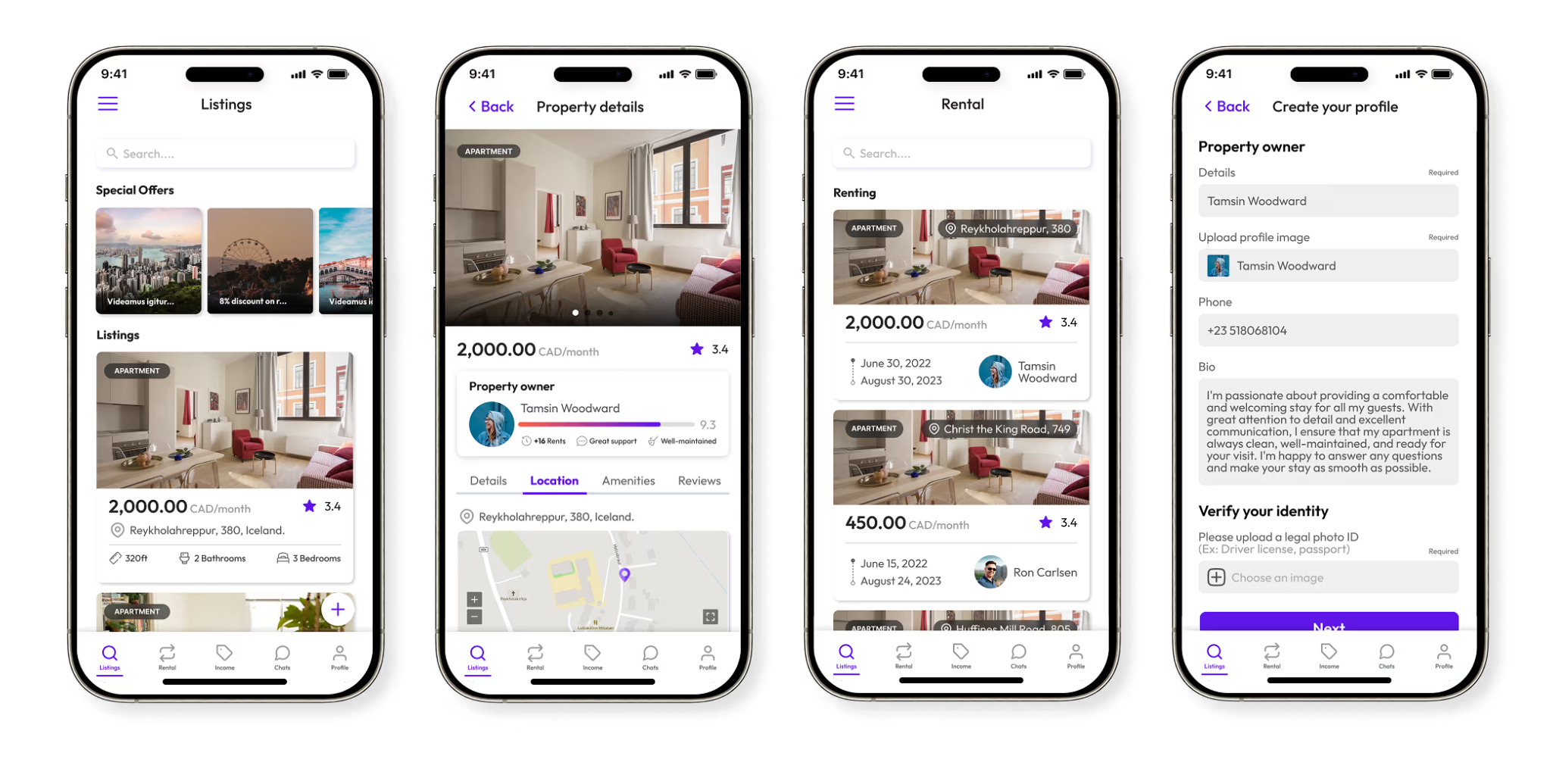
RentFund is an MVP that reimagines rent payments by automating verification and rewarding tenants with cash-back incentives, while simplifying workflows for property managers.
What problem the app solved
Rent verification was manual, slow, and error-prone, costing managers time while offering no benefits to tenants who consistently paid on time.
Outcomes or measurable impact
The MVP reduced rent payment processing time by 50% and achieved a $3M valuation, validating product–market fit and opening the door to scalable growth in a traditionally stagnant market.
7. RedZone – Offline Field Operations App
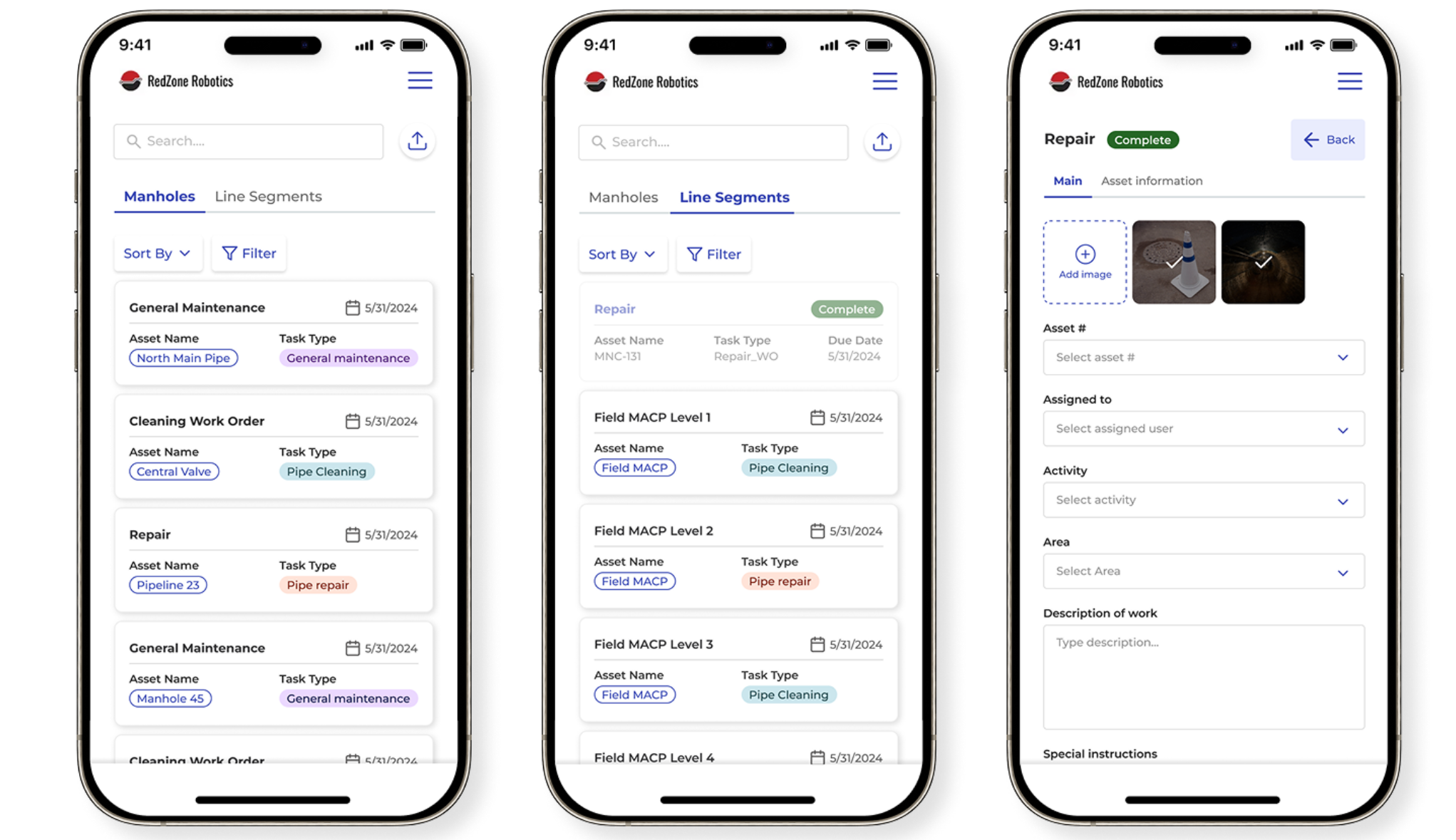
RedZone is a field operations app designed for teams working in environments with no connectivity, including underground infrastructure inspections. The app enables workers to capture, validate, and sync operational data without relying on real-time internet access.
What problem the app solved
Field teams relied on paper forms while working in manholes and remote locations, leading to lost information, incomplete records, and delayed data entry once connectivity was restored. This manual process caused errors, slowed reporting, and reduced trust in infrastructure data.
Outcomes or measurable impact
The app reduced the time required to log work orders by 40% and increased data accuracy by 80%, while supporting over 150 active users across field teams and city officials with reliable offline-first workflows.
8. Career Nerds – Coaching Operations Platform
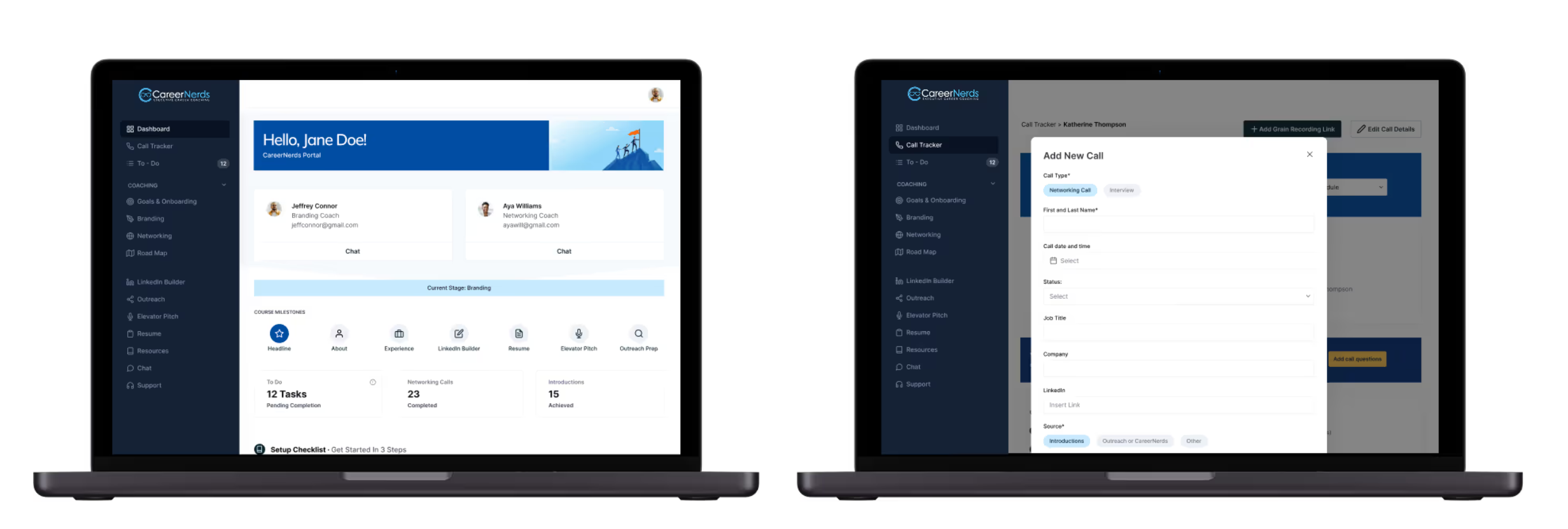
Career Nerds is a centralized business platform built to support a multi-month career coaching program involving multiple coaches, clients, and operational roles. The app replaced spreadsheet-based workflows with structured dashboards and automation.
What problem the app solved
Client data, assignments, and progress tracking were spread across dozens of disconnected spreadsheets, making collaboration difficult and consuming hours of administrative work for coaches. As the business scaled, this fragmentation became unsustainable.
Outcomes or measurable impact
The platform reduced time spent on administrative tasks by 75% and increased coach productivity by 40% within the first month, while improving visibility across all client journeys and coaching phases.
9. The Attributes – Leadership Assessment Platform
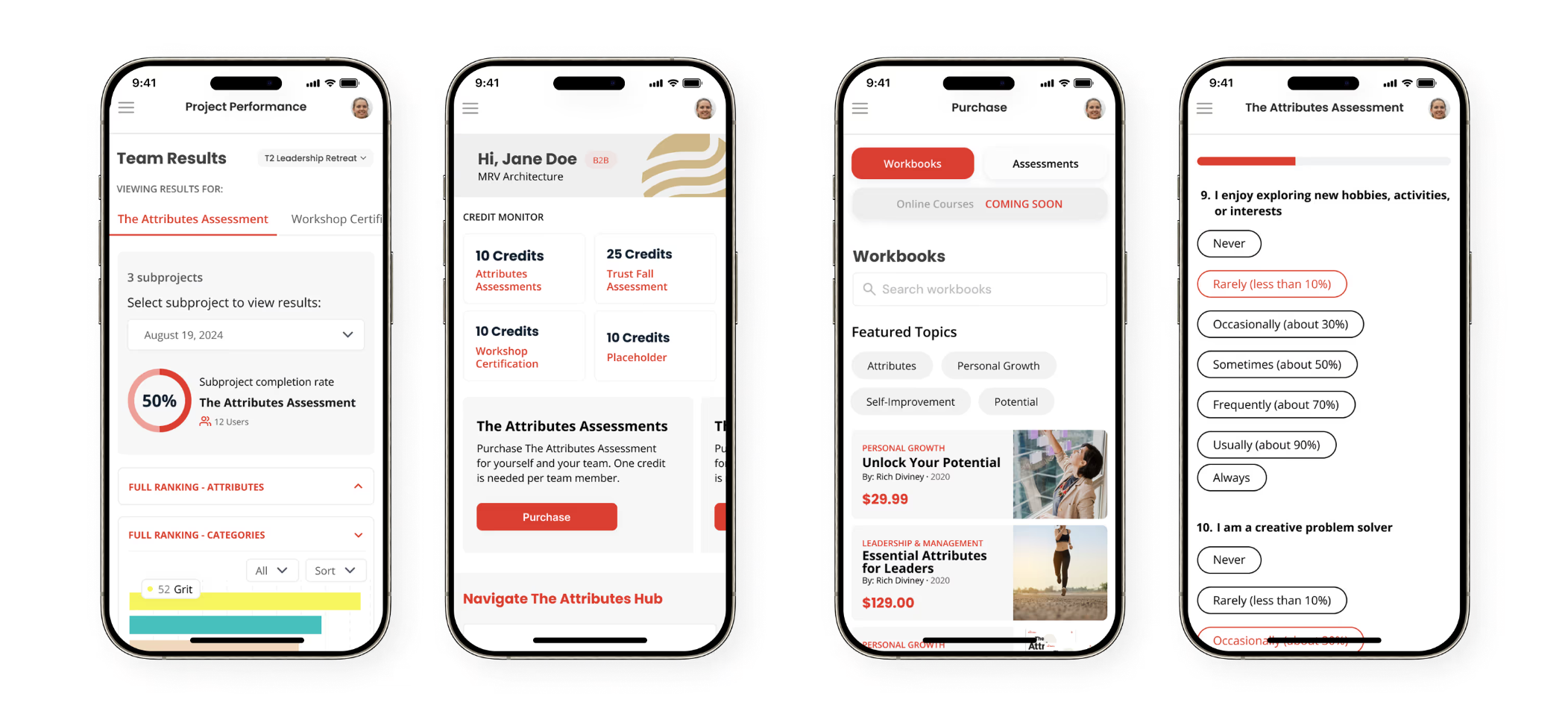
The Attributes is a scalable assessment platform used by organizations to measure and develop leadership capabilities across teams. What began as a simple assessment tool evolved into a multi-version enterprise platform supporting thousands of users.
What problem the app solved
The original tool could not scale to enterprise use cases, lacked professional reporting, and restricted the company’s ability to expand its product offerings or monetize at higher levels.
Outcomes or measurable impact
The platform achieved full ROI within six months of launch, onboarded over 1,300 users into single enterprise projects, and now supports more than 3,000 monthly active users across multiple industries.
10. Margaritaville – Recipe & Consistency Management App
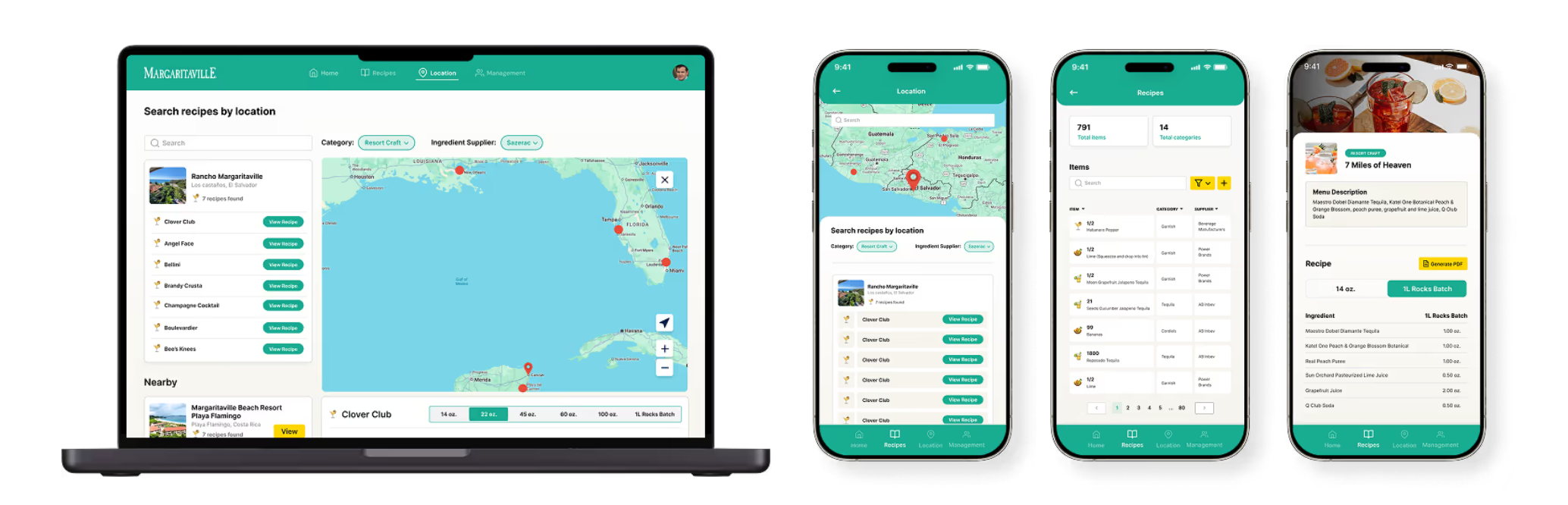
Margaritaville is an internal operations app designed to maintain drink consistency across more than 100 hospitality locations. The app centralizes recipes, portion calculations, and updates in a single mobile-accessible system.
What problem the app solved
Recipes lived in outdated spreadsheets and printed documents, making updates slow and inconsistent across locations. This caused variations in drink quality, portion control issues, and lost profitability.
Outcomes or measurable impact
The app increased profitability per drink by 18% through improved portion control and enabled recipe updates to be rolled out 83% faster across all locations, ensuring consistent customer experience at scale.
11. Language Keeper – Military Training & Learning App
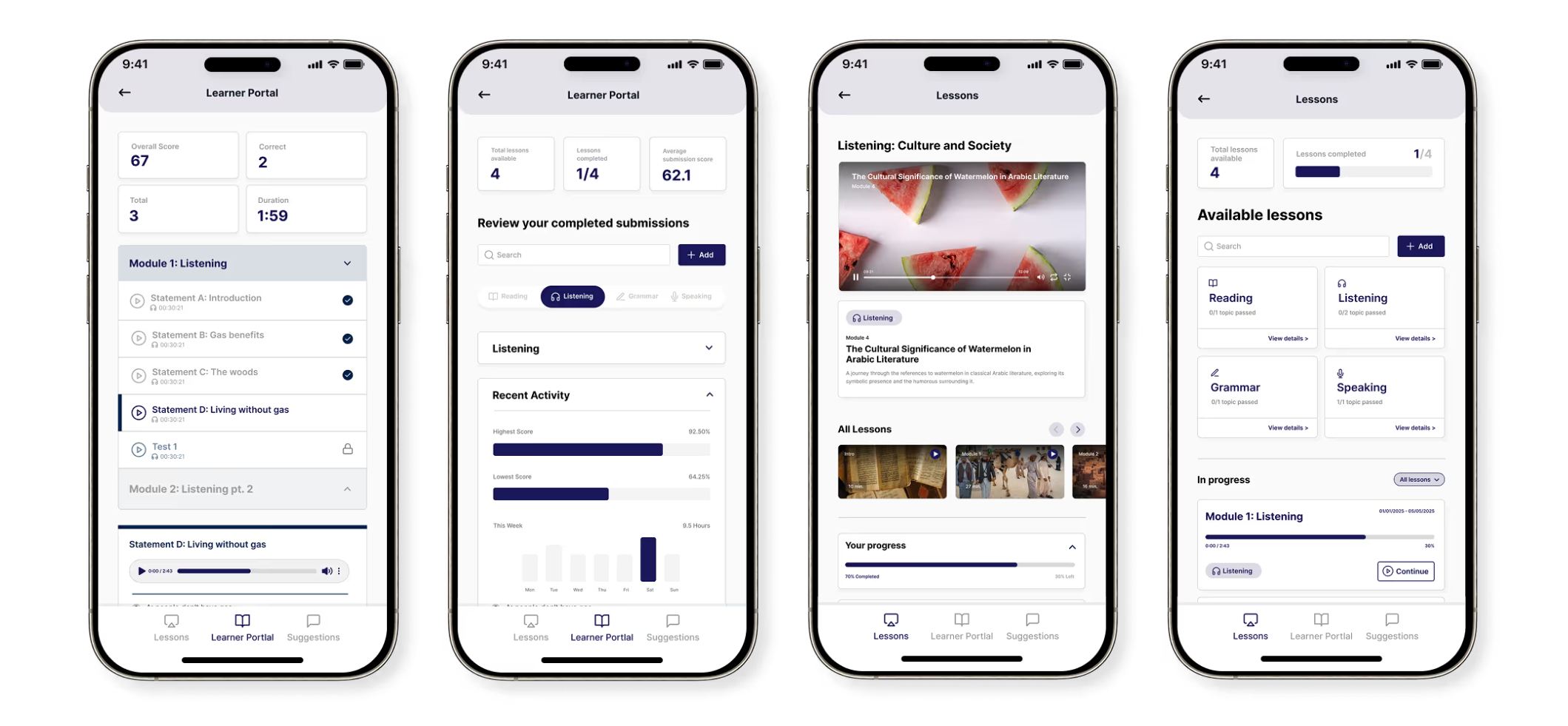
Language Keeper is an education platform designed to help military professionals retain critical language skills between formal training sessions. The app combines structured learning paths with adaptive practice to support long-term fluency.
What problem the app solved
Language skills degraded rapidly between annual training programs, with no consistent way to practice, track progress, or identify skill gaps before they impacted operational readiness.
Outcomes or measurable impact
Users completed 70% more lessons compared to traditional approaches, and the platform received a 90% approval rating, demonstrating strong engagement and effectiveness in maintaining language proficiency.
12. BarEssay – AI Study & Exam Preparation App
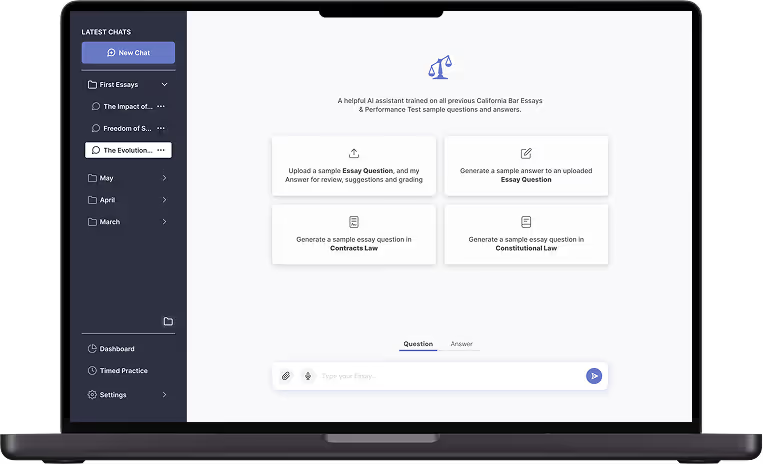
BarEssay is an AI-powered learning platform designed to help law students prepare for the California Bar Exam through personalized essay feedback and targeted study guidance.
What problem the app solved
Traditional study methods lacked individualized feedback and forced students to spend excessive time studying without clear insight into their weaknesses, leading to inefficient preparation and low confidence.
Outcomes or measurable impact
Students using the platform spent 30% less time studying while dedicating 70% more effort to areas needing improvement, significantly increasing study efficiency and outcome quality.
13. ToyCycle – Safe Toy Trading Marketplace
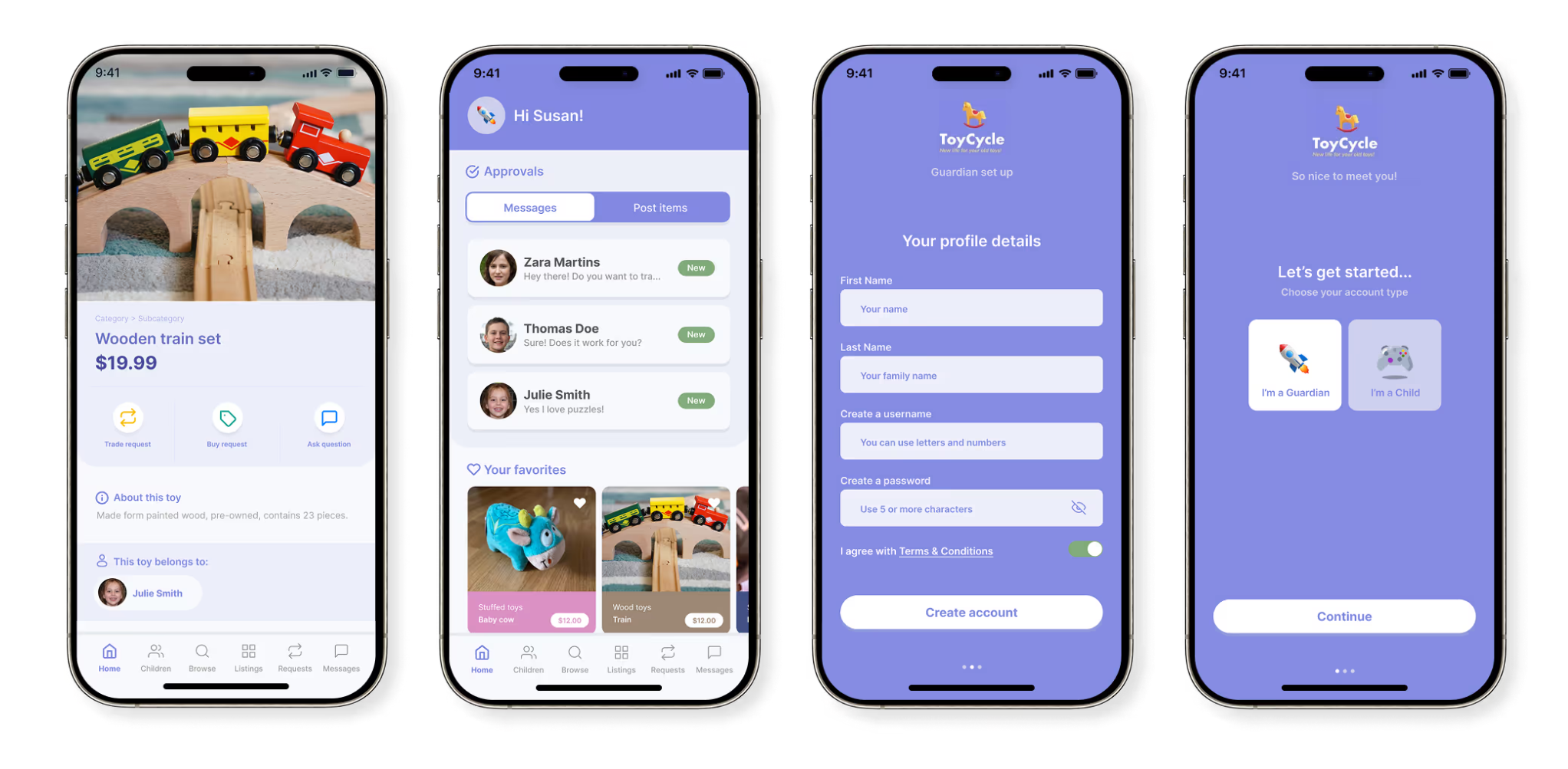
ToyCycle is a child-focused marketplace that allows kids to trade toys within trusted communities, while giving parents full oversight and control. The app balances independence, safety, and sustainability education.
What problem the app solved
Parents wasted money on toys that quickly lost value, while existing marketplaces were not designed to meet safety, privacy, and regulatory requirements for children.
Outcomes or measurable impact
The app achieved a 30% month-over-month increase in active users and a 90% parent satisfaction rate, while successfully creating a safe, trusted environment for peer-to-peer toy exchanges.
14. MaidManage – Service Operations & Pricing App
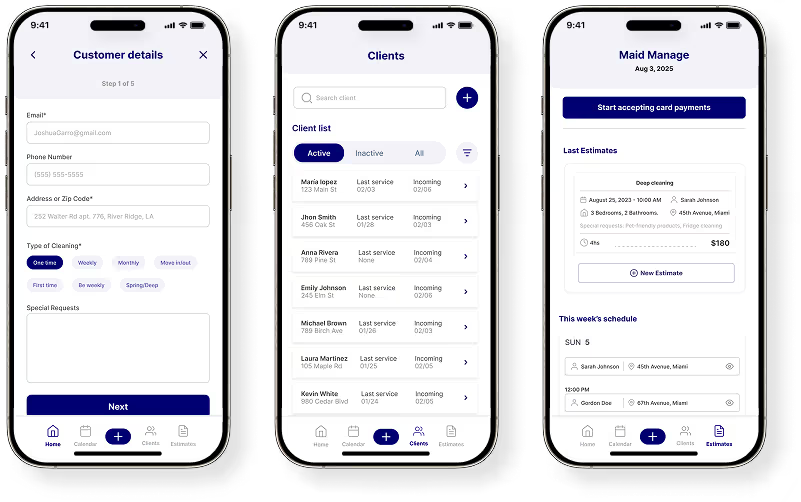
MaidManage is an operations and pricing app built for domestic cleaning professionals who need to manage estimates, bookings, and payments without complex software. The app was designed to bring structure and professionalism to an industry often reliant on manual processes.
What problem the app solved
Cleaning professionals were losing paid working hours to manual price calculations, inconsistent estimates, and fragmented booking workflows. Payment collection relied on cash or informal tracking, creating cash flow issues and reducing the perceived professionalism of the service.
Outcomes or measurable impact
The app reduced time spent on manual calculations and paperwork by 25% and improved payment processing efficiency by 40%, allowing workers to focus on billable work while delivering a more consistent and professional client experience.
15. TEN – Event Staffing Marketplace
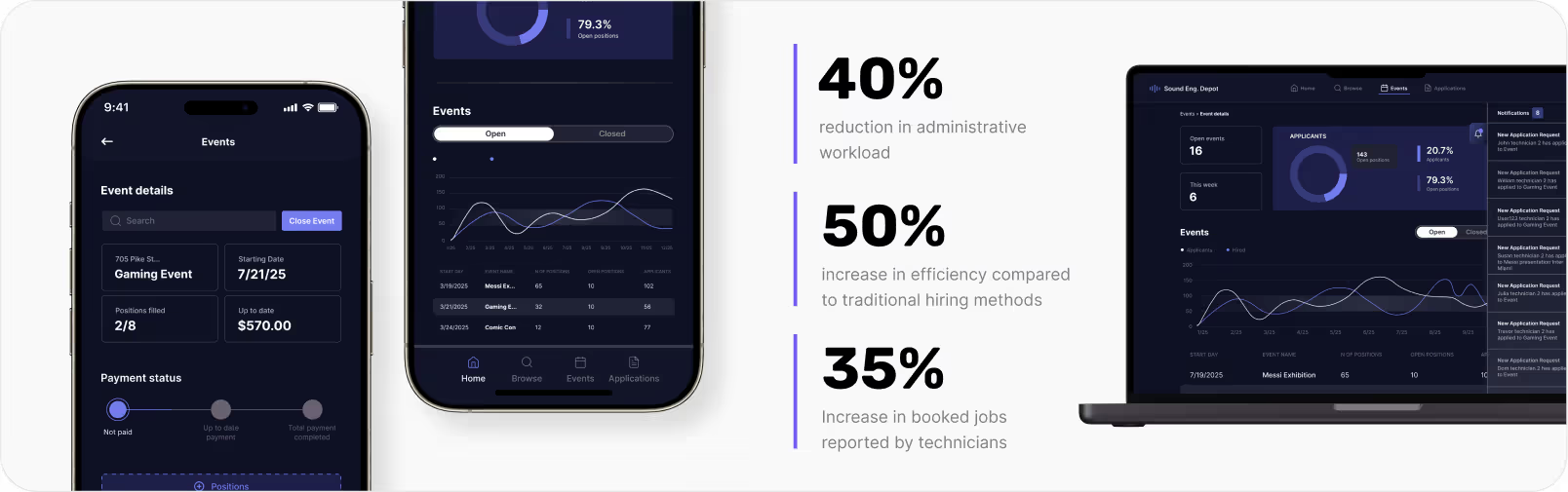
TEN is a two-sided marketplace designed to connect event producers with qualified technical professionals for live productions. The platform streamlines hiring, communication, and payment workflows in an industry traditionally driven by word-of-mouth and manual coordination.
What problem the app solved
Event producers struggled to find available, qualified technicians on short timelines, while skilled professionals missed opportunities due to fragmented networks and lack of visibility. Manual scheduling, unclear requirements, and payment coordination created inefficiencies on both sides.
Outcomes or measurable impact
The platform reduced administrative workload for producers by 40% and increased hiring efficiency by 50%, with most roles filled within 24 hours. Technicians also saw increased job bookings and faster resolution of last-minute staffing needs.
How to Choose the Right No-code Platform for Your App Idea
- Matching app type to the right builder
Not all no-code platforms are designed for the same type of product. Internal tools, consumer mobile apps, marketplaces, and AI-driven platforms have very different technical and operational requirements. Choosing a builder that aligns with your app’s core use case ensures performance, usability, and scalability stay intact as the product evolves. - Understanding platform limitations early
Every no-code platform has boundaries around data complexity, integrations and customization. Understanding the difference between low-code vs no-code helps teams set realistic expectations and avoid hidden constraints. - Avoiding rebuilds later
Rebuilds usually happen when early platform decisions ignore long-term needs. A clear roadmap, even at MVP stage, allows teams to select tools that support future growth, reducing the risk of having to migrate or re-architect once traction increases.
Should You Build No-code Apps Yourself or Hire Help?
- DIY building vs working with experts
Building a no-code app yourself can work for early experimentation, simple internal tools, or learning purposes. But as soon as the app supports real users, data, or revenue, decisions around structure, permissions, and integrations start to compound. That’s where experience matters more than tooling. - When hiring no-code developers makes sense
Working with experts becomes critical when the app is tied to operations, growth, or customer experience. Knowing how to hire no-code developers helps teams avoid costly mistakes and ensures the product is built with scalability, security, and real-world usage in mind. - Trade-offs between speed and control
DIY can feel faster initially, but hidden technical debt often slows teams down later. Teams that understand a no-code agency working process benefit from clearer ownership, better documentation, and a product that can evolve without constant rework.
How to Evaluate No-code Agencies for Building Your App
- What to ask before choosing a partner
Before selecting an agency, focus on how they approach product thinking, not just delivery. Knowing the right questions to ask before hiring a no-code agency helps you understand how they validate requirements, handle edge cases, and plan for scalability over time. - Red flags to avoid
Be cautious of agencies that promise unlimited speed, avoid discussing limitations, or jump straight into building without discovery. Scanning lists of best no-code agencies is useful, but a strong portfolio should always be paired with clear process and decision-making transparency. - Setting expectations clearly
Successful projects start with aligned expectations around scope, ownership, iteration, and post-launch support. Defining how decisions are made, how feedback is handled, and what success looks like prevents friction and keeps the project moving forward with confidence.
Conclusion
No-code apps are no longer experiments or shortcuts. They are already powering real businesses across industries, supporting daily operations, customer-facing products, and scalable platforms with measurable impact.
Success ultimately comes down to clarity. Choosing the right use case, the right platform, and the right execution path determines whether no-code becomes a growth lever or a future limitation.
If you’re considering a no-code app for your business and want to understand what makes sense to build, how far it can go, and how to approach it strategically: let’s talk.

Related Articles
- Bubble vs Adalo | 11 Factors to Decide the Best One
- Glide App Examples: 16 Real Business Apps (2026)
- FlutterFlow vs Glide | 10 Factors Compared (2026)
- 5 Real FlutterFlow App Examples (Live Product Use Cases)
- FlutterFlow vs Draftbit | 9 Factors Compared (2026)
- FlutterFlow vs WeWeb | 10 Factors Compared (2026)
Last updated on
September 3, 2026
.

Jesus is a visionary entrepreneur and tech expert. After nearly a decade working in web development, he founded LOW/CODE Agency to help businesses optimize their operations through custom software solutions.


FAQs
What are no-code apps used for in real businesses?
Can no-code apps handle complex workflows and logic?
Are no-code apps suitable for customer-facing products?
Which industries benefit the most from no-code apps?
When should you avoid building an app with no-code?
Do no-code apps scale as the business grows?
Related Articles
![What Are Low-code Tools? [Features, and Examples]](https://cdn.prod.website-files.com/61cbe22a00483909d327afc6/69de878d902970291a8e40ea_69b2c0ed22d1ae8689dc9420_what-are-low-code-tools-.avif)
No-code/Low-code
What Are Low-code Tools? [Features, and Examples]
Learn what low-code tools are, how they work, and see real examples used to build apps faster. A clear guide covering features, use cases, and benefits.

No-code/Low-code
How to Build White-Label Mobile Apps with Low-code
Learn how to build scalable white-label mobile apps with low-code. Architecture, security, monetization, and faster launches for agencies and SaaS teams.

No-code/Low-code
Top no-code influencers you need to follow
Meet the top no-code influencers you need to follow, experts who are leading the way in this rapidly growing field. Stay updated with their insights!

No-code/Low-code
No-code App Development Cost (2026 Guide)
Get a clear breakdown of no-code app development cost in 2026. Compare pricing, hidden costs, timelines, and real estimates to plan your app budget confidently.


Why customers trust us for no-code development


